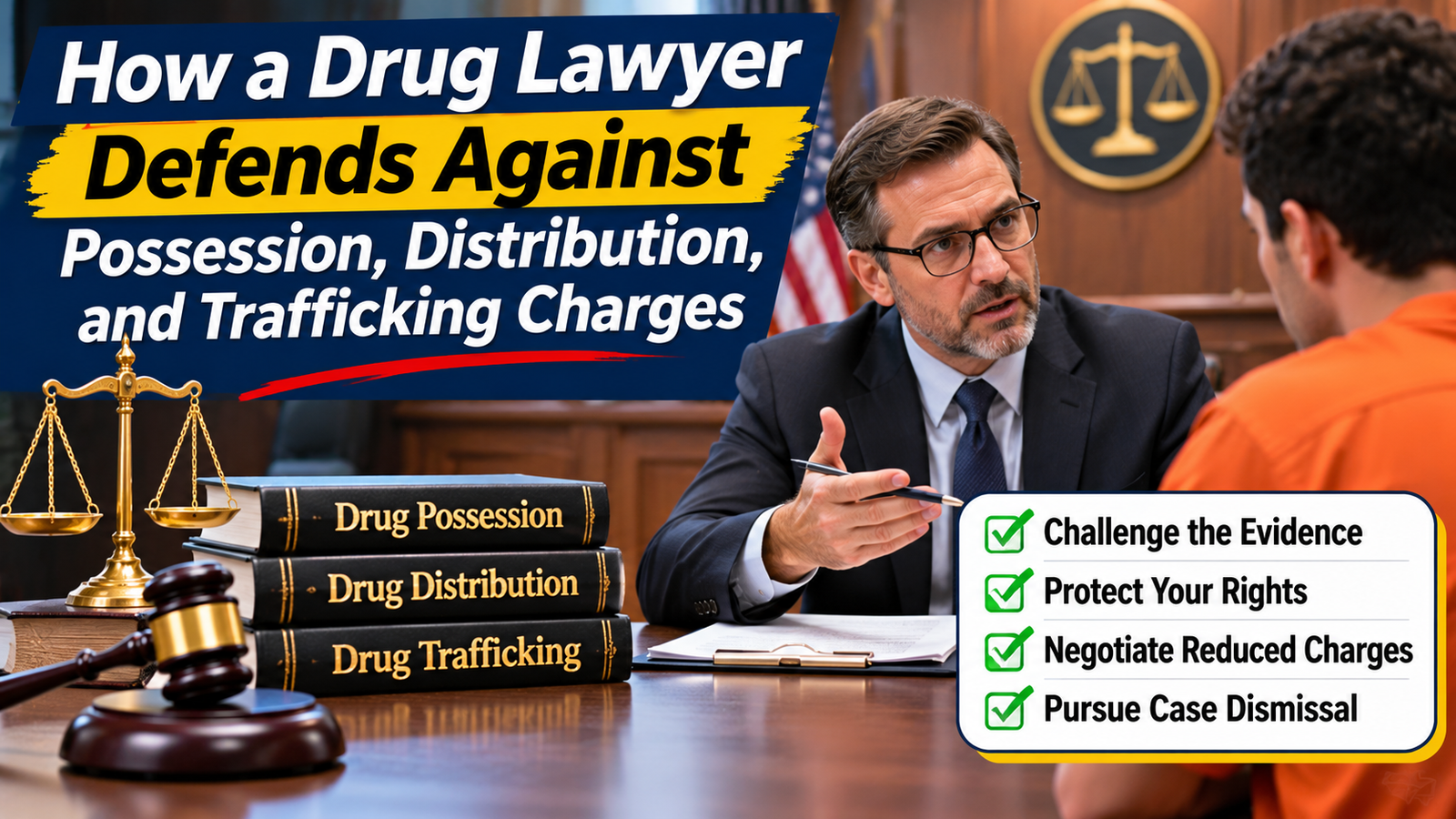
A drug charge may turn your life upside down. You can be afraid of jail, penalties, concern about your work and family. Even a modest smattering of drugs can spell major legal issues. Being charged with drugs doesn’t mean you are guilty. The prosecution must provide strong evidence to prove its case. A good drug lawyer will be prepared to look at the facts and question weak assertions. Drugs instances are slightly different. Simple possession, drug distribution, and trafficking have varying risks. Every charge warrants a vigorous defense.
What Is the Difference between Possession, Distribution, and Trafficking of Drugs?
Drug offenses come in many flavors in the United States. The accusation often depends on the circumstances, the drug, and the quantity. Here’s what these charges look like:
- Possession of a narcotic: This is holding an illicit narcotic in your possession. There are two forms of drug possession recognized by law: actual and constructive.
- Drug distribution: This is the distribution, sale, or transfer of drugs to another individual. Not always for payment.
- Drug trafficking: This usually includes huge quantities of drugs, distribution, sales, or drug chain operations. This can be under federal or state law.
Federal statute (21 USC 841) forbids knowingly or intentionally distributing banned narcotics. It also includes possession with intent to distribute. Penalties vary based on numerous circumstances, including the amount and type of substance. A person might be charged with many offenses for a single incident. This makes a careful case review all the more necessary.
How a Drug Lawyer Can Question the Evidence.
Evidence is a crucial factor in drug cases. Police can offer evidence of seized narcotics or phone records, video, and eyewitnesses. A drug lawyer will consider how police discovered and handled the evidence.
1. Searching and Arresting
When police search individuals, automobiles, and houses they have to observe the law. The Fourth Amendment protects from unwarranted searches and seizures. The lawyer determines whether authorities had a proper warrant or a proper justification for the search. The lawyer also verifies that the cops obeyed the search parameters. If the officers violated the law, then the defense can request the court suppress some evidence. This can undermine the prosecution’s case.
2. Fight Drug Possession Charges
Drug possession isn’t always the same as drug ownership. Drugs in a common automobile or residence may make it unclear who was controlling drug use. An attorney can dispute claims of knowing about the medicines. The defense may also defend themselves as to whether they had influence over the person.
3. Challenge the Drug Test Results
Lab testing often decides the winner or loser of drug cases. Such tests determine the identification and weight of the material. The lab report and testing techniques can be reviewed by a lawyer. The defense can raise issues of errors, mishandling, or deficiencies in the testing.
4. Assessing Witness Testimony
Witnesses cannot be trusted. Some might have faulty memories or their motivations to declare that someone is a criminal. A lawyer is looking for contradictions and omissions in statements. This can reveal weaknesses in the prosecution’s story.
How Does a Lawyer Defend Against Possession With Intent to Distribute?
Possession with intent to distribute is a more serious offense than simply possession. Prosecutors must establish that the defendant knew that he or she possessed the narcotics and intended to distribute them. They can rely on enormous quantities of drugs, scales, money, or little packs. They may be suspicious, but alone they do not prove guilt. The drug attorney’s overall picture. For example, scales could be used for something other than drug manufacturing, and the cash may have been earned by honest labor. Without substantial evidence, the defense can contest the charges. The lawyer can alternatively claim that the evidence only applies to mere possession. This distinction can affect the charge and probable sentence.
Strong Defenses for Drug Trafficking Charges
Drug trafficking cases can be complex, including many individuals and a vast quantity of evidence. The police may argue that a person assisted in transporting, storing, or selling drugs. An early step in formulating a defense is to consider the alleged role. Did the person knowingly participate in the activity? Was there strong evidence connecting the person to the drugs? Some of the defense strategies a lawyer can use:
- Challenge illegal searches and seizures.
- Challenge statements concerning the nature or weight of the drugs.
- Dispute assertions that the defendant was aware of the drugs.
- Examine phone and other digital evidence.
- Contest witness testimony and informant statements.
- Look at if police tied the defendant to the purported operation.
Conspiracy charges can also be fought with a defense. It is not enough to show people knew each other: prosecutors have to be able to establish the legal elements.
Why Is Drug Amount Important?
The amount of drugs can be a significant factor in a criminal case. Federal law has varied punishments depending on the drug and the quantity. Some federal drug crimes carry mandatory minimum jail sentences. Prior convictions and facts can also affect sentencing. Typically the lawyer will evaluate how prosecutors measured weight. The lawyer can question what the authorities did in an effort to obtain the weight or look at any drugs. This is an important step because a slight difference in weight can alter some charges. The actual effect depends on the law involved.
Steps To Take After Arrest on Drug Charges
What you do after getting arrested can damage your case. Do not do anything that may affect your defense in the future. Remember these steps:
- Stay calm: Do not quarrel with officers or disobey legitimate commands.
- Exercise your right to be silent: Without an attorney, do not answer inquiries regarding the case.
- Do not talk about the case: Do not tell people and do not post on social media.
- Maintain useful records: Store any messages, receipts, and other evidence that can assist your argument.
- Call a drug defense attorney: Get legal advice immediately.
Do not have anyone modify their narrative or destroy evidence. Give your lawyer the truth about what transpired. Openness will allow the defense to be prepared for court.
How Platinum Criminal Defense Law Firms Can Help You?
When your future is at stake, you want the appropriate legal support. A competent lawyer can analyze the charges against you and discuss your legal choices. David Benowitz of the Platinum Criminal Defense Law Firm has experience protecting clients from criminal allegations. Mr. Benowitz believes in quality client service at accessible rates. Martindale-Hubbell has given him an AV rating, while AVVO has given him a 10 rating. He also belongs to the National College of DUI Defense. He serves as an instructor at Trial Advocacy Workshops at Harvard Law School. He has a strong criminal defense and trial advocacy background. An experienced Criminal Defense Attorney can evaluate the evidence, dispute weak claims, and defend your rights. Every case has different facts. The correct defense relies on the charges, evidence, and laws in the state or federal court.
Frequently Asked Questions (FAQs)
- What is a drug attorney?
Short answer: Drug lawyers/drug defense lawyers are criminal defense lawyers that specialize in drug crimes representation.
Detailed answer: A drug lawyer looks over police reports, lab tests, witness statements, and the search history. The lawyer looks for legal defects and lack of evidence. The defense may be able to get reduced charges, have evidence suppressed, or may fight for a not guilty result as a whole.
- Is it possible to be charged for drug possession dismissed?
Short answer: Yes, dismissal can occur in some drug possession situations.
Detailed answer: Dismissal may be conceivable with a lack of strong evidence or a police violation of your legal rights. It may also be a defense if failure to prove the defendant had knowledge of possession. It will rely on the laws and circumstances of your location.
- Difference between drug distribution and trafficking?
Short answer: Drug distribution entails giving drugs, whereas trafficking is generally a larger drug operation.
Detailed answer: Drug distribution can also mean selling or delivering drugs to another person. Trafficking may involve larger volumes, transportation, or coordinated drug operations. The definition and punishments differ based on federal and state law.
- Can cops examine my car in a drug case?
Short answer: Police need a good reason to search your car.
Detailed answer: Generally, police need some reason to search your car, however there are several exceptions. These include consent and probable cause. If permitted by law, a lawyer can contest an illegal search by examining the facts.
- Can a drug lawyer assist in the reduction of trafficking charges?
Short answer: A drug lawyer can bargain for a reduced punishment option or fight the case.
Detailed answer: The lawyer may consider witness statements, drug quantity, and purpose. The defense can attack the prosecution’s case or enter into a plea bargain if appropriate. No attorney can promise results.