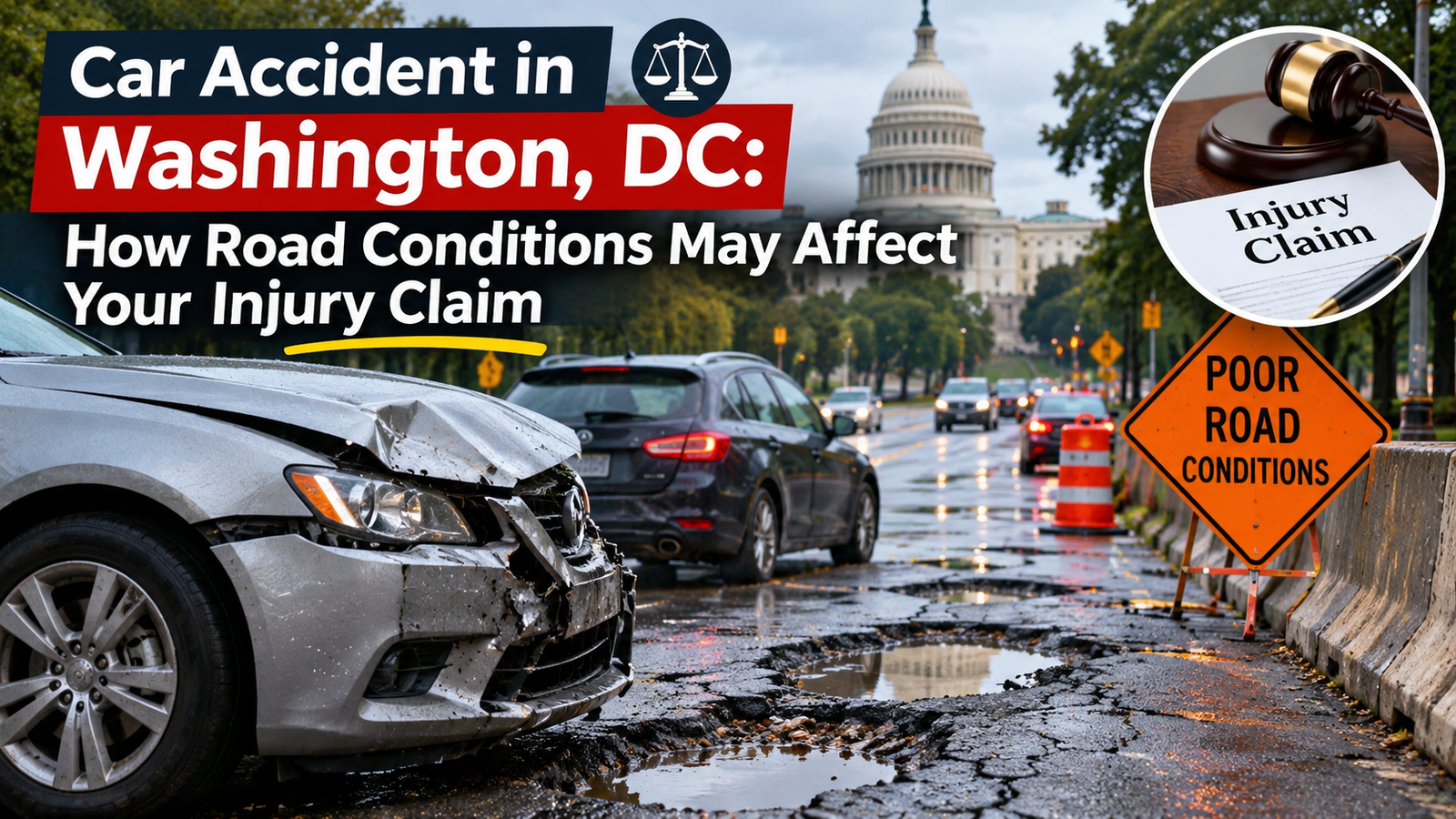
Car accidents occur in seconds of time but can have ramifications for years. But driving even can be risky on bad roads. Potholes, loose gravel, faded lane markings, and defective traffic lights can all lead to accidents. Another hazard is the crowded streets of Washington, DC. Drivers share the road with bikes, buses, pedestrians, and delivery trucks. But even a minor road fault can cause significant injury. But, who is at fault when unsafe road conditions result in a crash? It is contingent upon the facts, cause, and proof. Knowing this can save your injury claim.
Bad Road Conditions Can Cause Serious Crashes
A driver may find it hard to control his car due to road conditions. Even safe drivers are not immune to risk. A road in disrepair can lead to a difficult trip rather than a regular one. Common traffic dangers in Washington, DC include:
- Potholes: Deep enough to wreak havoc on tires, bend wheels, or create unexpected swerves.
- Uneven pavement: Bumps can cause you to lose your balance.
- Bad drainage: Water puddles can make tires lose traction.
- Faded lane lines: This can make it difficult for drivers to stay in their lanes.
- Broken traffic lights: Lanes may collide, resulting in major accidents.
- Debris: Rocks, metal, and other things may cause drivers to brake or swerve.
Rain, snow, and ice can only enhance these concerns. Heavily used roads also suffer from wear and tear from everyday driving. An unseen hazard may catch a driver off guard, with little time to respond and avoid losing control.
Who’s at Fault in a Car Accident?
Fault is not as simple as a broken road. First people investigating need to discover what caused the accident and who had a duty to prevent the accident. There could be a number of liable parties depending on the facts. Another motorist: A driver may exceed the speed for conditions when roads are wet, or may fail to veer around an obvious hazard. Distracted driving and hazardous lane changes can also contribute. Local government: Poor road maintenance or a recognized hazard may give rise to a claim for injury. Facts must be present that prove a breach of a legal duty. Construction company: Road work can be dangerous due to leaving debris, not marking dangers properly, or not maintaining proper safety. Property owner: A property owner may be responsible for causing injury if dangerous conditions on private streets and access ways caused the accident. An accident might include more than one party being liable. A closer look can reveal how each person’s activities led to the crash outcome.
The Role of Fault Shared Fault Laws in Washington, DC
Washington, DC has strong shared culpability principles in many injury situations. This is the gold standard for the contributory negligence rule: any negligence (lack of care) by the injured party causing the injury bars recovery of damages. A key exception involves walkers and other vulnerable road users. Their carelessness is not a bar to recovery unless such negligence was the proximate cause of the damage and such negligence is greater than the combined negligence of all the defendants (D.C. Code § 50-2204.52). That rule applies in some motor vehicle-pedestrian-vulnerable user crashes. That is the difference between bike and pedestrian accidents. It calls for careful analysis of the facts of the case and the legislation.
What Evidence Will Support Your Injury Claim?
Road risks may have a chance of changing suddenly. Potholes may be filled, debris cleared, or broken signals being repaired shortly after a crash. It’s a good idea to have early proof of how the road looked at the time. Helpful evidence could be:
- Photos and video showing the road, damage to the cars, signs around the accident.
- Witness names and police reports.
- Medical bills and treatment notes.
- Footage from security cameras in the neighborhood or dash cams.
- Road maintenance and earlier hazard complaints.
- Expert reports on road design and crashes.
Get the whole scene from safe vantage points. Include surrounding details like road signs, traffic lights, lane markings, and road work signs. These facts could tell you what caused the crash. Medical records matter, too. They link your injuries to the accident and demonstrate what treatment you required. Keep receipts and records of missed labor as well.
Can Sue the District?
Yes, You Can File a Claim for Some Road Accidents Against the District Government. However, it might be difficult to establish liability. For example, perhaps your crash was caused by a big pothole. The success of your claim may hinge on whether the District knew or should have known about the hazard. It also depends on whether officials have time to act on it. Washington, DC has a particular notice rule for lawsuits against the District: D.C. Code §§ 12-309 (Comprehensive Revision of 1973) requires that written notice be served upon the proper office within six months of the harm. The notice must describe when, when, how, and under what conditions the occurrence occurred. These claims are handled by the Office of Risk Management in Washington, D.C. Sometimes the notice will be a police record, but it must have the relevant information. Your claim can suffer dramatically if you fail to meet that deadline. If you think the road was defective, see an attorney as soon as possible.
What to do after a crash?
Your health is the top priority. Some injuries take time to present even when you feel nothing. Get medical help and follow your doctor’s advice. If you are safe to do the following:
- Dial 911 if there are injuries or if you want the police to be on hand.
- Take photos of the scene of the crash and the road hazard.
- Obtain the names and contact information of witnesses.
- Maintain copies of bills and repair records.
- Inform your insurance company about the crash.
- Avoid admitting fault or guessing at the cause of the crash.
- Retain copies of all reports and claims paperwork.
Do not risk returning to a risky stretch of road to take photographs. Your safety is not worth any evidence.
How a DC Car Accident Attorney Can Help
Many Road Injury Claims Have Multiple Causes: Many road injury claims contain multiple causes. A lawyer can investigate the accident, obtain records, and determine who was involved. A competent lawyer can also request traffic camera footage, repair logs, maintenance documents, and witness testimony. This information may be useful in proving that a road danger was a factor in the accident. Price Benowitz Accident Injury Lawyers, LLP assists motor vehicle accident victims in the Washington, DC area. It takes cases involving vehicle, truck, motorbike, bicycle, bus, and pedestrian accidents. It also deals with serious traumas including spinal cord damage and burns. A DC Car Accident Lawyer can examine the facts and your legal alternatives. Getting early advice will protect important evidence and help you meet deadlines. Injury can uncover a modest road defect. Don’t gloss over information if unsafe road conditions caused your crash. Having a precise record of what transpired can make all the difference.
Frequently Asked Questions
- Is it possible to file a vehicle accident claim if the road conditions were bad?
Short answer: yes. If the incident was caused by a negligent party, then dangerous road conditions can play a role in an injury claim.
Long answer: Other accidents may stem from potholes, drainage problems, malfunctioning signals, and hazardous road maintenance. You may be able to file claims against other drivers, contractors, or even government agencies. It must be shown that the dangerous state contributed to the accident and injuries.
- Can I sue the District for a pothole accident?
Short answer: Yes, sometimes.
Long answer: You may have a legal claim if the District failed to properly respond to a dangerous road condition. You must establish the correct legal basis for culpability. D.C. also requires six months’ written notice of claims against the District. D.C. Code § 12-309.
- What if my accident was caused by bad weather and dangerous roads?
Short answer: Both can influence the decision of who is at fault.
Long answer: Slippery, snowy, wet, or rainy roads are perilous. Drivers should adjust speed and behavior according to conditions. Investigators will look at weather information, photographs, and witness statements in an attempt to reconstruct the scene.
- How can I establish my injuries were caused by the road condition?
Short answer: Police reports, witness testimony, repair reports, and photos can help.
Long answer: Such like these: Medical documents may also reveal how serious your injuries are. If you’ll see the crash correctly with dashcam film or traffic camera footage. Road repair logs and filed complaints may prove that officials were aware of a problem.
- What if I am in a car accident due to road conditions?
Short answer: Yes, especially with severe injuries and/or government liability.
Long answer: A lawyer can investigate the collision, identify potential defendants, and obtain evidence that could be beneficial. Obtaining legal advice will also lower your risk of missing critical deadlines. This is especially the case in terms of potential liability on the part of the District.
Closing Thoughts
Life may change in an instant on hazardous roadways. If unsafe roads contributed to your Washington, DC car crash, collect evidence. Follow up with medical care and educate yourself about your legal rights before making a decision on your claim.